

Your website is either working for you around the clock or quietly losing business to a competitor down the street. The ways modern websites attract local customers have shifted dramatically, and what worked three years ago simply does not cut it anymore. Local search now involves AI summaries, mobile-first indexing, and hyper-specific intent signals that reward businesses with genuine digital presence. This article breaks down six proven methods, grounded in current local SEO techniques and real-world examples, so you can stop guessing and start converting nearby searchers into paying customers.
Table of Contents
- Key Takeaways
- 1. Ways modern websites attract local customers through GBP alignment
- 2. Hyperlocal landing pages that prove you actually belong there
- 3. Fast, mobile-friendly design that captures "need it now" moments
- 4. Content that answers what your local customers are already asking
- 5. Loyalty and engagement features that bring customers back
- My honest take on what actually moves the needle
- Ready to put these strategies to work for your Indiana business?
- FAQ
Key Takeaways
| Point | Details |
|---|---|
| GBP alignment drives rankings | Consistent data between your website and Google Business Profile is the foundation of local search visibility. |
| Hyperlocal pages need real proof | Templated location pages fail; use staff photos, geo-tagged images, and real testimonials to rank and convert. |
| Mobile speed determines conversions | Fewer than half of mobile sites pass Core Web Vitals; fast-loading pages capture urgent local intent. |
| Content must answer urgent questions | Pages that explain services, timelines, and next steps get surfaced by AI and convert better. |
| Engagement features build loyalty | Personalized rewards and recognition programs increase repeat visits and average spend significantly. |
1. Ways modern websites attract local customers through GBP alignment
Eight of the top ten local pack ranking factors come directly from Google Business Profile signals. That means your website does not rank in isolation. Google treats your site and your GBP listing as a single entity graph, and when those two sources tell different stories, your visibility takes a hit.
The technical term for this is entity consistency. It means every detail about your business, from your name and address to your phone number and hours, must match exactly across your website, your GBP listing, and every third-party citation online. Conflicting entity data suppresses local visibility, and no amount of extra keywords will fix it.
Here is what to prioritize on your website to align with GBP signals:
- NAP consistency: Your Name, Address, and Phone number on your contact page and homepage footer must be character-for-character identical to your GBP listing.
- LocalBusiness schema markup: Adding LocalBusiness schema to your homepage and service pages increases your odds of appearing in rich results and AI-generated citations.
- Review velocity integration: Embed a review call-to-action on your confirmation pages and post-purchase emails. Consistent new reviews over time carry more ranking weight than a one-time surge of reviews.
- GBP-mirrored content: Your homepage headline, service descriptions, and category language should reflect what you have listed in GBP.
Pro Tip: Set a calendar reminder every 90 days to audit your NAP data across your website, GBP, Yelp, and any local directories. One outdated listing can drag down your entire local presence.
2. Hyperlocal landing pages that prove you actually belong there
Generic location pages that swap out a city name and call it done are a fast track to nowhere. AI and search engines detect thin content, and duplicated pages that differ only by city name get downranked. The bar for effective hyperlocal pages is real, tangible proof that your business has a genuine presence in that area.
Think about what a local customer actually wants to see. They want to know your team serves their neighborhood, that real people nearby have used your service, and that you understand local context. A photo of your crew at a recognizable local landmark carries more trust than a paragraph stuffed with city keywords.
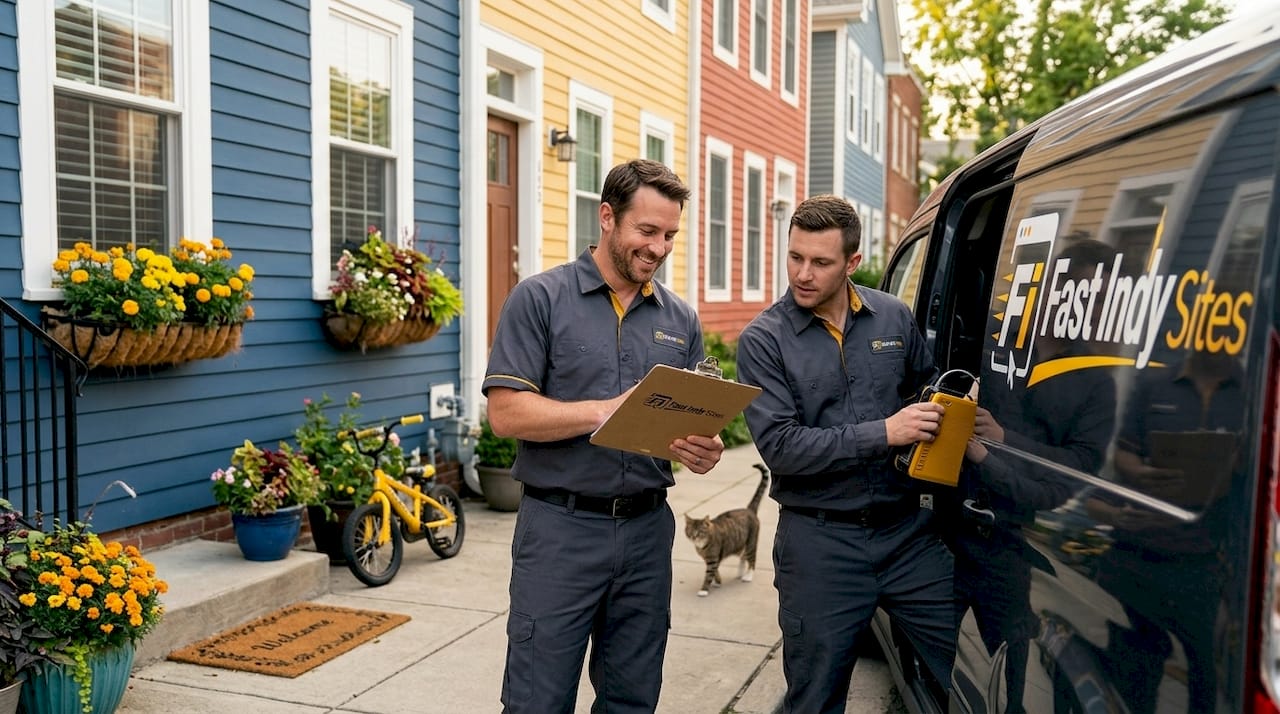
Here is a quick comparison of what separates effective hyperlocal pages from thin ones:
| Element | Thin page | Effective hyperlocal page |
|---|---|---|
| Images | Stock photos | Geo-tagged photos of local jobs or staff |
| Testimonials | Generic quotes | Reviews from customers in that specific neighborhood |
| Content | City name swapped in | References to local streets, landmarks, or events |
| Schema | None | LocalBusiness schema with area-specific address |
| Trust signals | None | Local team bios with names and photos |
Effective website strategies for locals go beyond content. They signal authenticity through specificity.
Pro Tip: When you complete a job in a new neighborhood, take a quick photo on-site and add it to that area's landing page. Geo-tagged images from real locations are a signal that no template can replicate.
3. Fast, mobile-friendly design that captures "need it now" moments
When someone searches for a plumber, a restaurant, or a hair salon on their phone, they are not browsing. They are deciding. A slow or cluttered mobile site means they bounce and call your competitor instead.
The data here is stark. Only 48% of mobile sites passed Core Web Vitals in 2025, compared to 56% of desktop sites. That gap represents a massive opportunity. If your mobile site loads fast and feels clean, you are already ahead of more than half the competition.
| Metric | Mobile average | Desktop average | Impact on local conversions |
|---|---|---|---|
| Core Web Vitals pass rate | 48% | 56% | Mobile failures lose urgent local intent |
| Largest Contentful Paint | 3.2s | 2.1s | Slower load = higher bounce rate |
| Cumulative Layout Shift | Higher on mobile | Lower on desktop | Unstable pages reduce trust and taps |
Modern web design tips for local businesses should always start with mobile performance, not desktop aesthetics. Compress your images, reduce third-party scripts, and use a hosting provider with servers close to your customers.
Pro Tip: Run your site through Google's PageSpeed Insights and filter results to "Mobile." Fix the three highest-impact issues first. You do not need a perfect score. You just need to be faster than your local competitors.
4. Content that answers what your local customers are already asking
AI summarizes local business information before a customer ever makes a call. That means your website needs to function like a knowledgeable front-desk employee, not a brochure. If a potential customer asks "how long does it take to get a quote from this plumber?" and your site does not answer that, AI will find a competitor whose site does.
This is where most local business websites fall short. They list services but skip the details that actually drive decisions: turnaround times, what happens after you contact them, pricing ranges, and what to expect on a first visit.
Here is how to structure your content to attract nearby customers and satisfy AI-driven local discovery:
- Service pages with process descriptions: Explain step by step what happens after someone contacts you. "You call, we schedule a free estimate within 24 hours, our technician arrives in a marked truck" is far more persuasive than "We offer plumbing services."
- On-page FAQ sections: On-page FAQs tied to real customer questions improve both AI relevance and local search rankings. Write questions the way customers actually speak them.
- Local testimonials on service pages: Place reviews near the relevant service, not just on a separate testimonials page. A review about your HVAC work belongs on your HVAC service page.
- Clear contact triggers: Every page should make it obvious what to do next. Phone number in the header, a click-to-call button on mobile, and a short contact form above the fold.
Effective website marketing for local businesses means treating every page as a conversion opportunity, not just a content placeholder.
5. Loyalty and engagement features that bring customers back
Attracting a new customer costs significantly more than keeping one. Yet most local business websites are built entirely for first-time visitors and do nothing to encourage a second visit. That is a missed opportunity with a measurable cost.
Eighty percent of shoppers value recognition and belonging, and personalized rewards can increase average customer spend by 25%. Those are numbers worth building for.
Here is how to use your website to build local customer engagement and loyalty:
- Loyalty program integration: Connect a points-based or visit-based rewards program directly to your website. Customers log in, check their points, and redeem rewards without needing a separate app.
- Birthday and anniversary offers: Collect customer birthdays during checkout or account creation. Automated personalized offers sent via email with a link back to your site drive repeat visits at low cost.
- Community-centered content: Post about local events you sponsor, team members who live in the neighborhood, or causes you support. This builds the kind of community trust that no ad budget can buy.
- Re-engagement prompts: If a customer has not visited in 60 days, trigger an automated email with a personalized offer. Your website becomes the hub that connects all of these touchpoints.
Boosting local traffic online is only half the job. The other half is giving people a reason to come back, and your website is the right place to make that happen.
My honest take on what actually moves the needle
I have worked with enough local businesses to know that most of them are chasing the wrong things. They want more backlinks, more blog posts, more social media posts. What they actually need is boring, foundational work that nobody talks about because it does not feel exciting.
In my experience, the single biggest unlock for local search visibility is entity consistency. Not a new content strategy. Not a redesigned homepage. Just making sure your business name, address, and phone number are identical everywhere they appear online. I have seen businesses jump into the local pack within weeks of fixing this one issue, after months of trying everything else.
The second thing I have learned is that local SEO success requires treating your business as a consistent, corroborated entity across every digital touchpoint, not just a collection of keywords. When your website, your GBP, your Yelp page, and your Facebook profile all tell the same story with the same details, Google's confidence in your business goes up. That confidence translates directly into rankings.
My honest advice: spend 80% of your effort on getting the fundamentals right and 20% on content and engagement features. The businesses I have seen fail at local SEO almost always skipped the foundation and went straight to tactics.
— Shariff
Ready to put these strategies to work for your Indiana business?
Understanding what makes a local website perform is one thing. Building one that actually does it is another. That is where Fastindysites comes in.
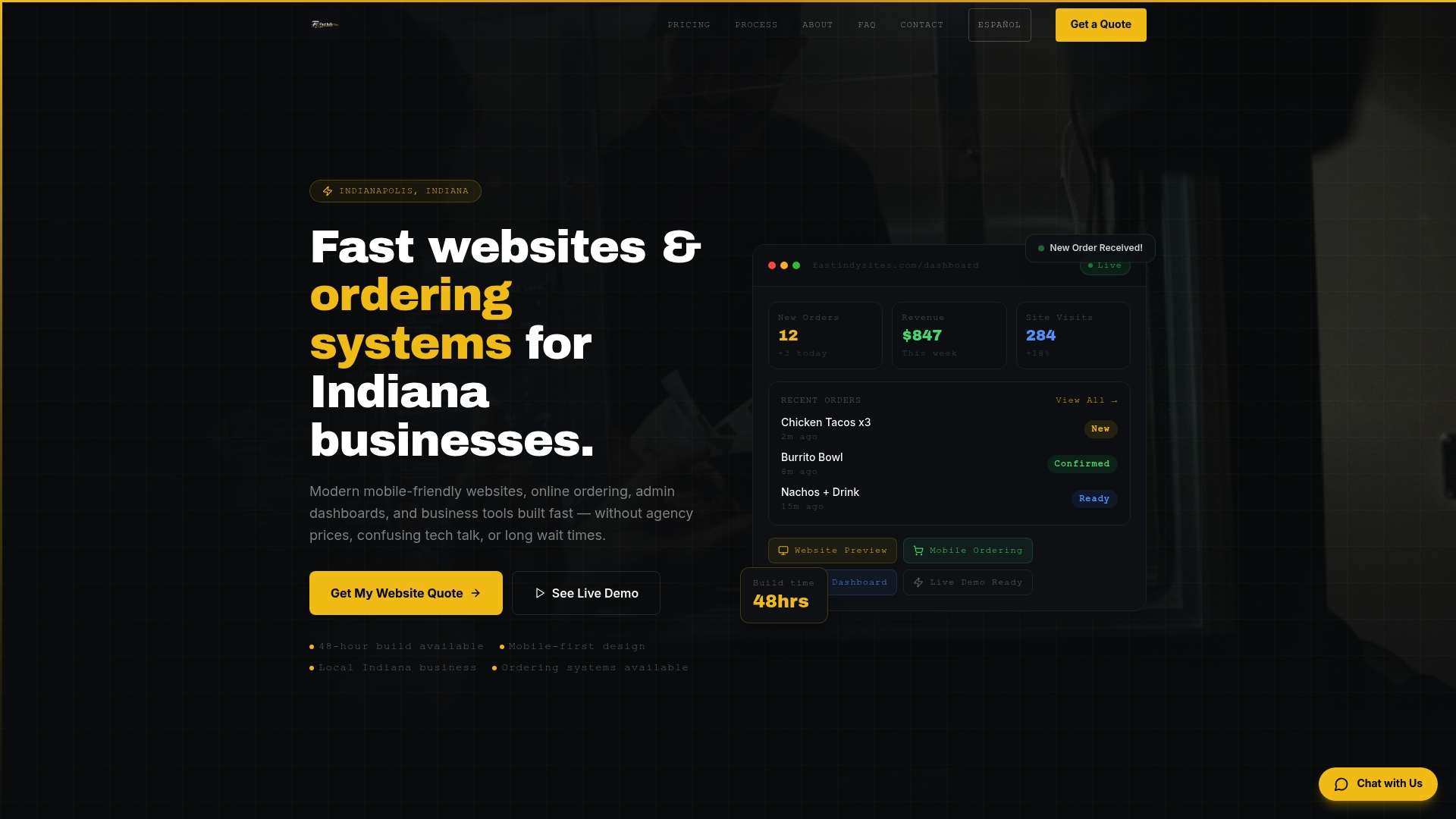
Fastindysites builds modern, mobile-friendly websites for Indiana restaurants, food trucks, and small businesses in just 48 hours. Every site is built with local SEO in mind, from NAP-consistent contact pages to location-specific content structures that give you a real shot at the local pack. If you are ready to stop losing customers to competitors with better websites, explore how Fastindysites can help you generate local leads with a site that works as hard as you do.
FAQ
What is the most important local SEO factor for websites in 2026?
Google Business Profile alignment is the top factor. Eight of the top ten local pack signals come from GBP, so your website must mirror that data exactly.
How do hyperlocal landing pages help attract nearby customers?
Pages with real local proof, such as geo-tagged photos, neighborhood-specific testimonials, and staff bios, rank better and convert more visitors than generic templated pages that simply swap city names.
Why does mobile speed matter for local customer conversions?
Local searches happen in high-intent moments when people need something fast. With fewer than half of mobile sites passing Core Web Vitals, a fast-loading mobile site gives you a direct conversion advantage.
How can a website support customer loyalty for a local business?
Integrating a loyalty program, automating personalized offers, and creating community-centered content on your website turns one-time visitors into regulars. Recognition and belonging are what keep local customers coming back.
Does content on a local business website affect AI search results?
Yes. AI summarizes local business pages before customers call, so pages that clearly explain services, timelines, and next steps are more likely to be surfaced and recommended.